
What a carer-friendly community looks like to Mobilise carers

Updated: Jun 4
Carers Week 2026 runs from the 8th to the 14th of June and the theme is "Building Carer-Friendly Communities." It’s a vital goal, but as an organisation made up of unpaid carers, we know that slogans don't change our day-to-day reality.
Before we can talk about building these communities, we need to take an honest look at the ground we are currently standing on. To find out what it will actually take to make our towns and neighbourhoods work for us, we recently surveyed our own community in this Mobilise Moment.

The responses we got back were sobering, blunt, and familiar. When asked how connected we feel to our local communities, almost half (47%) of us gave the answers: "I don't feel connected at all," or "Fairly disconnected".
The words we used to describe our daily lives in the survey comments paint a similarly dismal picture. We describe feeling isolated, lonely, anxious, and deprived. One of us says they live "like a hermit" , while another shared a profound and painful truth: "You cease to exist as a person, and you become invisible".
This isn't just about feeling a bit lonely; it is an epidemic of isolation. We'll never shy away from sharing carers’ voices, even when it is uncomfortable for people to hear them, so with this in mind, we’ve put together this breakdown of what the responses tell us.
We also know that Carers Week can be a complicated time for unpaid carers. While awareness campaigns are important, caring responsibilities do not pause for a week of recognition and we continue providing support every day. For some of us, the increased attention might make us feel disconnected from the reality of our experience, as it is not a holiday or break from caring. However, we'd like to look at it as a valuable opportunity to spark conversations, raise public awareness, and bring carers' voices into the spotlight. By creating moments of connection and visibility, we hope to help more carers feel recognised, supported, and aware that they are not alone in their caring journey.

Although feeling alone or isolated isn't our fault, we do have more power to change things than we may realise. We don't have to keep feeling this way and there are things that might help. Click here to read our guide to overcoming loneliness as a carer.
The reality of disconnection
To understand the disconnect, we have to understand the all-consuming nature of caring. For many of us, this isn't a job we can clock out of; it is a relentless, round-the-clock reality.
Zero free time: As one carer noted, they are at their wife's "beck and call 24/7," leaving absolutely no time to foster community ties.
Exhaustion: We are running on empty. One respondent explained their connection is "diminishing. I have to make the effort and I'm tired". Another stated they are simply "too busy caring" to even consider community activities.
Social shrinkage: Caring shrinks our world down to the walls of our homes. Friends drift away, invitations dry up, and the world moves on without us. One parent carer noted, "I don't get invited to parties anymore or social gatherings".
Unpaid carers are living a reality that most people simply don't understand until it happens to them. As one carer bluntly put it:
"Caring is pretty thankless. People only realise when it affects them".
Another added:
"Nobody cares about you and your problems... [it] is a living misery most of the time."

What we are actually asking for
1. Meaningful respite and short breaks
The single most frequent cry for help was for better access to local respite or short breaks. We need time to rest, to run basic errands, or simply to exist without being on high alert. However, current services are often practically useless to us. We face massive waiting lists, or find that care is simply unavailable when we actually need it. We need local, trustworthy, and accessible respite care so we can occasionally step off the treadmill.
2. Empathy and public understanding
A staggering number of us cited more understanding from the public about unpaid caring as our primary need. We frequently face judgment, impatience, or simple ignorance when out in public.
We want the public to understand that this "is not a career choice".
We want people to stop looking the other way when we are struggling on a bus or trying to navigate a shop with a wheelchair.
We don't want sympathy; we just want a baseline of awareness and patience.
3. Better physical accessibility
A community isn't friendly if we literally cannot navigate it. Poor infrastructure actively traps us in our homes.
Pavements and kerbs: Multiple respondents expressed deep frustration with "cars parked on pavements, hedges over paths, no step-down kerbs". One carer specifically pleaded, "Mend the pavements so I can actually get my husband out".
Transport issues: Public transport is often a nightmare, and there is a frustrating "expectation that carers can all drive as public transport is not great".
4. Flexible, realistic support networks
Even when support groups exist, they are often poorly scheduled. Many of us noted that groups run during weekday mornings, which is often impossible if we are juggling jobs alongside our caring duties, or managing difficult morning routines. We need evening meet-ups, online options, and central community hubs where information is always available.
What ‘good’ actually looks like

The responses weren’t all negative. We know what a carer-friendly community looks like because we've seen flashes of it. The survey highlighted several practical things that are already working:
Helpful retail staff: Carers specifically praised the "helpful checkout staff at our local Morrisons", “quiet shopping times” and pharmacies that go out of their way to be accommodating.
Practical environments: Small changes make a massive difference. For example, "dog-friendly shops and cafes" allow us to combine a rare snatched walk for the dog with running vital errands. And “there is good disabled parking at the local shopping centre. If there is good provision for the disabled that makes the carer's life easier.”
Free carer entrance: This allows carers to attend events or venues with their cared-for, which they may not have any personal interest in, without being financially penalised.
Proactive healthcare: While some struggled with GPs, others noted that their health centre "is carer-friendly with me and goes out of their way to make appointments accessible by home visits". Another mentioned “a dementia awareness day at the local library. A RNIB liaison officer at the hospital. Some wonderful NHS staff who have taken the time to listen to concerns.”
Grassroots peer support: Support works best when it comes from people who 'get it'. Local WhatsApp groups set up specifically for carers to network and check in on one another were highlighted as an absolute lifeline.
Condition-specific groups: “[We have] lots of dementia lunches and coffee mornings to enable carers to chat to others in similar circumstances - makes a big difference to the carer's life”.
Initiatives like The Disability Information Bureau: This operates in the north west of England and was flagged as helpful.
The Carer’s Passport system: This was introduced through a partnership between the Department of Health and Social Care, Carers UK and Carers Trust and was mentioned as an example of a useful scheme which makes life a little easier.
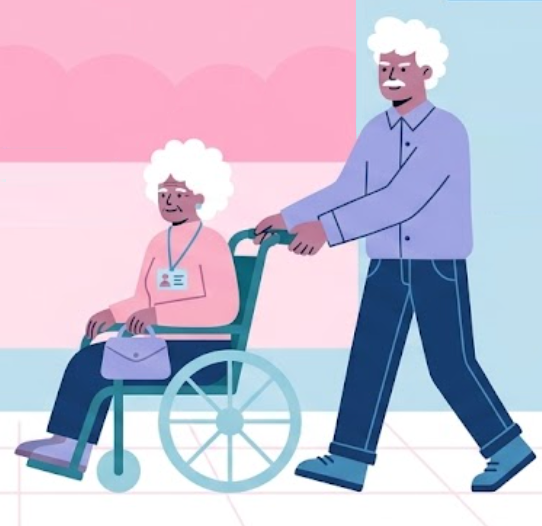
Various ‘Carers’ Card’ schemes: These are great initiatives and you can read our guide to the cards here. One carer wrote “When I carry the badge, the shops I walk into are more friendly and more likely to give out discounts.” Another said “It’s OK as long as we’re both wearing our lanyards. Then people know that my husband deals with Alzheimer's." There are various cards available:
National schemes: The main options are the Carers Card UK and the National Carers Card. These schemes offer verified photographic IDs alongside national discount programs.
Local Authority Programs: Many councils or regional carer organisations issue free or low-cost regional ID cards. Check your specific local council's social care directory to see if they offer a localised version.
Hidden Disabilities Sunflower: If you support someone with a non-visible disability, you can obtain a specialised caregiver card and lanyard via the Hidden Disabilities Sunflower Shop.
More ideas from carers
Some of us had ideas for other, simple measures which could make a big difference to carers’ lives:
One of us wrote that when ordering food “I worry I’ve left him at the table and he may have forgotten and [at the Garden Centre especially] it would be helpful if there was somewhere where we could press a bell etc for staff help at a table as opposed to waiting at a counter.”
Having groups close to home, or having transport provided, is much needed too: “Locally nothing - in other towns I see things advertised but there’s always a need to travel.”
There is more that healthcare providers could be doing to step up. One carer wished for “an easier way of being able to make appointments (not sitting in an 8am call, when I need to get my daughter ready for her school taxi), and to select appointments at most useful time for the person I care for.”
Carer-friendly social groups are welcomed, specifically those “that welcome both carer and cared-for, eg social groups, sports clubs etc. Not just groups specifically for carers or caring.”
While existing local infrastructure may fall short, digital solutions are always available, which is one of the reasons why we created the Mobilise community. We know that geographical distance doesn't have to mean total isolation. We saw the need for a space where carers don’t have to explain themselves, a place where everyone simply 'gets it', without the need for apologies or exhausting background stories.
“My caring community is predominantly online or a planned space where all participants “get it” - this minimises the potential for a negative experience.”
Mobilise is more than just an online community
If your local authority is partnered with us, our Carer Support Team offers the sort of one-to-one support that our survey responses show so many unpaid carers are crying out for. Because we know that rigid weekday mornings are often unworkable, our support is online, designed to fit into the unpredictable pockets of time you actually have. We offer virtual cuppas where you can share a coffee and have a candid vent, we provide practical, jargon-free guides to help you navigate the maze of carers' rights and benefits, and we host a community forum where you can connect with peers who are living the exact same reality.

The bottom line
Building a community that actually supports us doesn't require over-the-top campaigns; it takes pragmatism. It means councils fixing the dropped kerbs so we can cross the street safely, or scheduling a support group at a time we can actually attend. It means the person in the queue behind us offering a smile instead of an irritated sigh while we’re doing the
exhausting, unseen work of caring.
This Carers Week, our message to the world is that carers want to be part of the community, we just need the community to remove the barriers which are keeping us out. And, we want to remind our own caring family that while Mobilise might not be able to fix the dropped kerbs in your town, we are always here for you and can make sure you never have to navigate the system, or the isolation, alone.
More blog posts which might be helpful
Want more content like this?
Sign-up for our weekly newsletter to receive more carers' top tips and hacks. We'll keep you in the loop, from discounts for carers, to simple ways to get you through the day.


